Does your shop actually need barcodes?
Plenty of shops buy a scanner, use it for three weeks and go back to typing. Here is the test for whether yours needs one at all.
Plenty of shops buy a scanner, use it for three weeks and go back to typing. Here is the test for whether yours needs one at all.
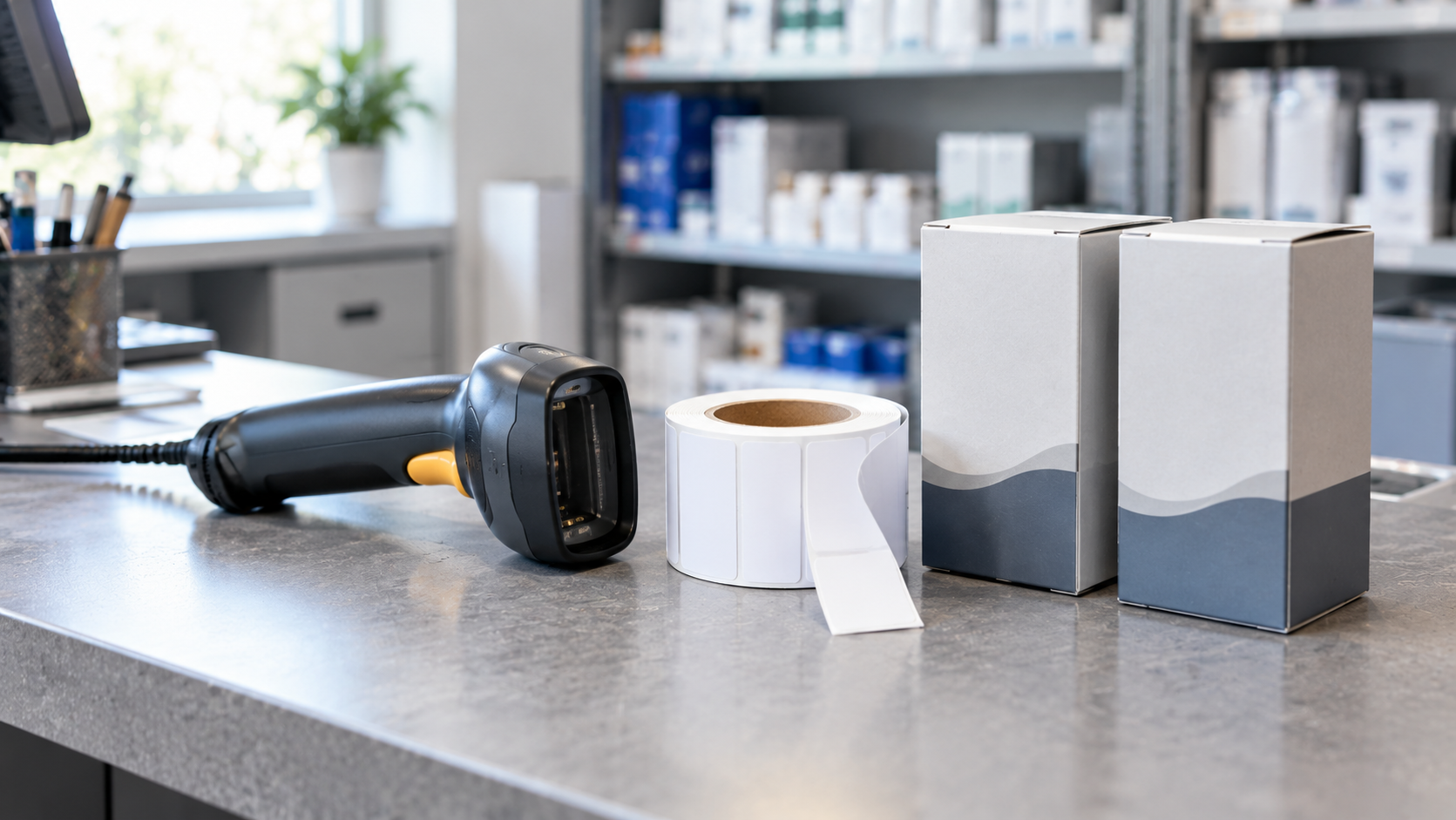
Barcodes look like the thing that makes a shop modern. A scanner beeps, a bill appears, everyone looks professional.
That is the wrong reason to get one, and it is why plenty of shops buy a scanner, use it for three weeks and go back to typing. Here is the right reason, and the test for whether your shop needs one at all.
Barcodes solve one problem well — telling apart items a person cannot reliably tell apart at speed.
Two bottles of the same brand, one 500ml and one 750ml. Two shirts, same design, different size. Surf Excel and Surf Excel Matic. The genuine part and the China copy, same shape, two thousand rupees apart.
If your shop is full of pairs like that, a barcode is not decoration — it is the difference between billing the right thing and finding out at stocktake that you have been selling the expensive one at the cheap one's rate for a month.
If you stock a few dozen items that nobody could confuse, you may genuinely not need barcodes. A fast search by name works fine, and one less thing to maintain is worth something.
This is the part that stops most shops before they start. Half the goods in a Pakistani shop have no printed barcode at all — local stock, loose items, things that came in a sack.
You do not need theirs. You print your own. A label printer and a roll of stickers, and every item in your shop has a code whether the factory gave it one or not. Your code, your shelf, your prices.
And where goods do arrive with a printed barcode, you simply use that one. The two live side by side.
That last one is why barcoding stalls. Do not try to code the whole shop in a weekend. Code the items that get confused — the sizes, the twins, the expensive lookalikes — and leave the obvious stuff to name search. You will get most of the benefit in a tenth of the work.
Scanning is faster than typing, but at a one-man counter that saves seconds. The real gains are quieter:
Code the item when it arrives, not when it sells.
Stock that is put on the shelf uncoded will be sold uncoded, because nobody stops to print a label with a customer waiting. A shop that codes at the purchase bench stays coded. A shop that intends to code later is a shop with a scanner in a drawer.
Every POSPlus system scans at the till and prints its own labels, so items with a factory barcode and items without both work the same way. Scanning a code adds the exact variant — the right size, the right grade — rather than a name that matches four things. It runs offline on one computer, with a one-time price and a free 15-day trial.
But start with the test at the top. If nothing in your shop gets confused, spend the money on something else.