How many boxes of tiles do you need?
A box is sold by the box, but a floor is measured in square feet. Here is how to get from one to the other without buying two boxes too many — or one too few.
A box is sold by the box, but a floor is measured in square feet. Here is how to get from one to the other without buying two boxes too many — or one too few.
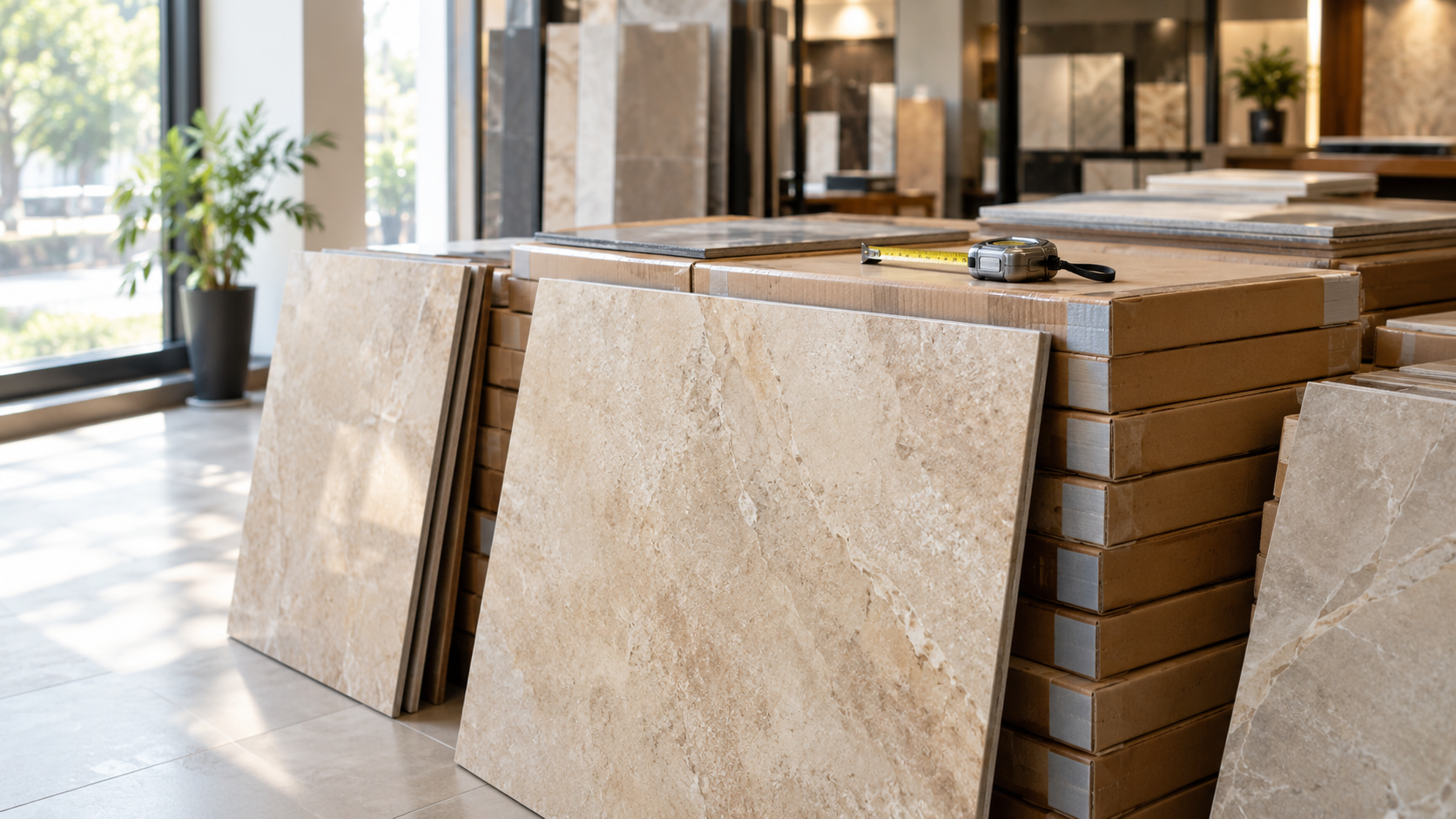
Tiles are sold by the box. Floors are measured in square feet. Almost every argument at a tile counter starts in the gap between those two facts — so here is how to close it.
Three numbers decide everything:
Then: add the waste to your area first, divide by the box coverage, and round up to a whole box.
The order matters. Adding waste after you divide gives you a different, smaller answer — and that is the one that sends you back to the shop.
Coverage changes with the tile size and with how many the manufacturer puts in a box. A box of 12×12 inch tiles might hold 10 and cover 10 sqft. A box of 24×48 might hold 2 and cover 16. Two boxes of the same size tile from different factories can hold different counts.
It is printed on the box. If you are buying over the phone, ask for it before you ask the price — a box that covers more is not more expensive, it is fewer boxes.
If it is not printed, work it out from one tile: a tile's area in square feet is (length in inches × width in inches) ÷ 144. A 12×24 tile is 288 ÷ 144 = 2 sqft. Multiply by the number in the box.
Waste is not breakage. It is the part of a tile you cut off at a wall and cannot use anywhere else.
Large tiles waste more than small ones, because the off-cut you throw away is bigger. A patterned tile that has to line up wastes more again.
A room 12 ft × 18 ft, tiled with a box that covers 15.5 sqft.
Now the price is simple arithmetic. At Rs 2,400 a box that is Rs 36,000 — and you can check any quote you are given against it.
Notice what happens if you skip the waste: 216 ÷ 15.5 = 13.9, rounded up to 14 boxes. One box short, discovered on the last afternoon of the job, when that shade may no longer be in stock.
Shops sell boxes, not tiles. You can sometimes buy loose tiles from an opened box, but the shade will not always match: tiles are made in batches, and two batches of the same design can differ enough to see in daylight.
This is also why it is worth buying one spare box on a large job and keeping it. A cracked tile two years later is a ten-minute repair if you have a matching spare, and a re-tiled room if you do not.
The same design is often sold in more than one grade — commonly A-grade, B-grade, imported and local. B-grade usually means small cosmetic faults: a slight size difference, a glaze mark, a shade that varies a little across the batch. For a wall behind a cupboard it may not matter at all. For an open floor in daylight it will.
Grade changes what a box costs. It does not change how many boxes a room needs.
Everything above is arithmetic a shopkeeper does twenty times a day, usually on a calculator, usually while a customer waits.
Tiles Plus does it at the counter: enter the room size or the square feet, pick the waste allowance, and it returns whole boxes and puts them straight on the bill. Rates can be held per box or per square foot and it converts between them, and a whole-house estimate across several rooms can be turned into a bill without re-entering anything. It runs offline on one computer, with a free 15-day trial.